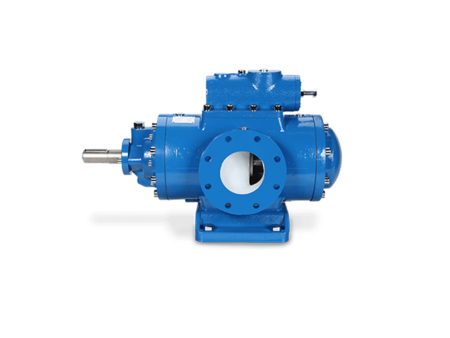

Screw Pumps
Screw pumps are positive-displacement rotary pumps used for smooth, consistent transfer of clean to moderately contaminated liquids, including viscous fluids. They’re often selected when you need low pulsation, stable flow, and good performance across a wide viscosity range.
What are screw pumps and how do they work?
A screw pump moves liquid using one or more rotating helical screws inside a close-fitting casing:
• As the screws rotate, they form sealed cavities that convey the liquid axially from inlet to outlet.
• Flow is continuous and typically low-pulsation compared with many other PD pump types.
• Performance depends on screw design (single/twin/three-screw), clearances, viscosity, and pressure.
Because clearances are tight, screw pumps are often best on clean or lightly contaminated fluids (application dependent).
Typical applications
• Oils and lubricants: lube oil transfer, fuel oils, hydraulic oils, filtration/circulation loops
• Fuels and hydrocarbons: diesel, kerosene, solvents (materials dependent)
• Marine and power: fuel/lube transfer and conditioning systems
• Industrial process: viscous liquids, resins, additives (duty dependent)
• Tank-to-tank transfer / loading: where smooth flow and consistent delivery are useful
(Suitability depends on viscosity, lubricity, solids content, and required pressure.)
Why buy screw pumps from Triark?
Triark can support pump selection, spares supply and aftercare—helping you choose the right screw pump type and configuration for viscosity, temperature, flow, pressure, and materials compatibility, then supporting uptime with service parts and technical guidance.
Screw pump spares and service
Common wear/service items include:
• Shaft seals (mechanical seal or packing, model dependent)
• Bearings
• Screw elements and wear components (clearance-related wear)
• O-rings/gaskets
• Relief valve components (if fitted)
Repair and maintenance
Good practice includes:
• Use filtration where appropriate to protect tight clearances
• Monitor for declining flow at constant speed (can indicate internal wear/slip)
• Ensure good suction conditions to avoid cavitation and seal distress
• Provide pressure protection (PD pumps should not deadhead—use internal/external relief)
• Confirm fluid lubricity is suitable for the design (poor lubricity can increase wear)