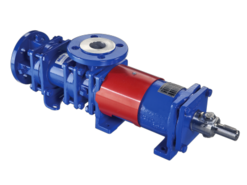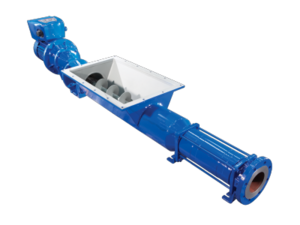

Progressive Cavity Pumps
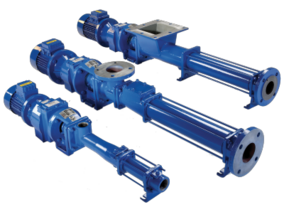
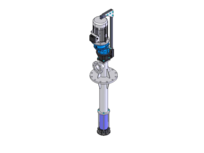
Progressive cavity (PC) pumps are positive-displacement pumps designed for smooth, low-pulsation transfer of viscous, shear-sensitive, and solids-containing fluids. They’re widely used when consistent flow, gentle handling, and the ability to move difficult media are more important than high-speed pumping.
What are progressive cavity pumps and how do they work?
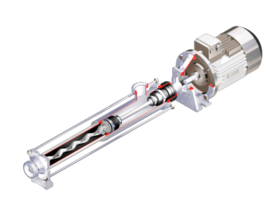
A progressive cavity pump uses a rotating helical rotor turning inside a fixed elastomer stator. As the rotor turns, it forms a series of sealed cavities that progress from the suction end to the discharge end—moving product forward continuously.
Because flow is generated by these moving cavities, PC pumps typically deliver:
• steady flow with low pulsation,
• good performance on higher viscosities,
• the ability to handle slurries and suspended solids (within the pump’s limits and with correct materials).
Typical applications
• Water & wastewater: sludge, thickened sludge, polymers, slurries (duty dependent)
• Food & beverage: viscous products, pastes, fruit preparations, ingredients (hygienic configurations when specified)
• Industrial/process: resins, adhesives, coatings, chemical slurries
• Mining and mineral processing: slurries and tailings transfer (duty dependent)
• Agriculture/biogas: manures, digestate, feedstocks (duty dependent)
Why buy progressive cavity pumps from Triark?
Triark can support pump selection, spares supply and aftercare—helping you match the right PC pump configuration to your required flow, pressure, viscosity, solids content, and materials compatibility, then supporting uptime with service parts and technical help.
Progressive cavity pump spares and service
Common wear/service items include:
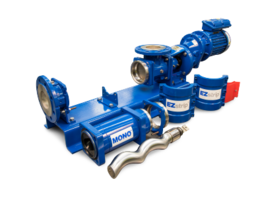
• Stator (primary wear component)
• Rotor (wear/scoring depending on abrasives and lubrication)
• Drive joint components (pins/bushes or joint sleeves depending on design)
• Mechanical seal / packing (model dependent)
• O-rings/gaskets
Repair and maintenance
Good practice includes:
• Avoid dry running (can rapidly damage the stator) — use dry-run protection where risk exists
• Keep suction conditions stable and minimise air ingress to reduce cavitation-like effects
• Monitor for reduced flow at constant speed (can indicate stator wear or slip)
• Use appropriate materials for abrasive duties and consider reduced speed to extend life
• Ensure pressure protection is in place (PD pumps should not deadhead)