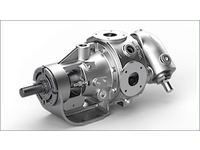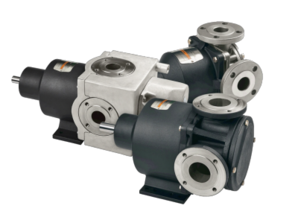

Internal Gear Pumps
Internal gear pumps are positive-displacement pumps designed for smooth, consistent transfer of clean, viscous liquids. They’re widely used where you need reliable flow, good suction performance, and stable handling of oils, fuels, resins, syrups and many other industrial fluids.
What are internal gear pumps and how do they work?
An internal gear pump uses two gears: an inner (drive) gear that rotates inside a larger outer (idler) gear. A stationary crescent-shaped spacer (in many designs) separates the inlet and outlet:
1. As the gears rotate and unmesh at the inlet, expanding pockets create suction and draw liquid into the pump.
2. The liquid is trapped between the gear teeth and carried around the casing.
3. At the outlet, the gears mesh again, reducing volume and forcing the liquid out at pressure.
This design is known for steady, low-pulsation flow and good performance on higher viscosities (within pump limits and with correct speed selection).
Typical applications
• Oils and lubricants: lube oil transfer, hydraulic oils, fuel oils (duty dependent)
• Fuels and hydrocarbons: diesel, kerosene, solvents (materials dependent)
• Resins, polymers and adhesives: consistent transfer of viscous fluids
• Food-related viscous liquids: syrups, molasses, fats/oils (hygienic configurations when specified)
• Bitumen and heavy fluids: where heated/viscosity-controlled pumping is used (duty dependent)
(Internal gear pumps generally prefer clean fluids; abrasives/solids can accelerate wear because of close clearances.)
Why buy internal gear pumps from Triark?
Triark can support pump selection, spares supply and aftercare—helping you match the correct internal gear pump configuration to viscosity, temperature, flow, pressure and materials compatibility, then supporting uptime with service parts and technical guidance.
Internal gear pump spares and service
Common wear/service items include:
• Shaft seals (mechanical seal or packing, model dependent)
• Bushings/bearings
• Gears and wear surfaces (clearance-related wear)
• O-rings/gaskets
• Relief valve components (if fitted)
Repair and maintenance
Good practice includes:
• Use filtration/strainers to protect close clearances
• Monitor for reduced flow at constant speed (often indicates internal wear/slip)
• Avoid running dry and ensure good suction conditions to prevent cavitation and seal distress
• Provide pressure protection (PD pumps should not deadhead—use an internal or external relief path)