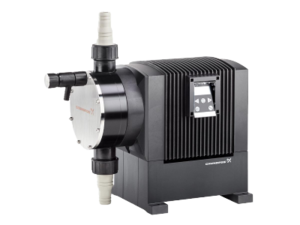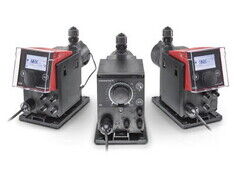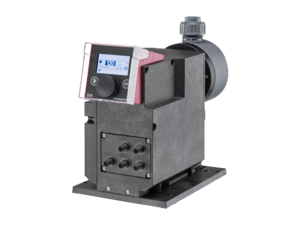

Metering Pumps
Metering pumps are positive-displacement dosing pumps designed to deliver precise, repeatable flow—typically for chemical injection where accuracy, controllability, and reliability are critical. They’re used for continuous dosing, batch dosing, and proportional dosing tied to flow or process signals.
What are metering pumps and how do they work?
A metering pump moves a known volume each stroke or rotation, so flow is controlled by speed/stroke rate (and sometimes stroke length). Common types include:
• Diaphragm metering pumps: a diaphragm flexes to draw in and discharge chemical through check valves (good containment and low leakage risk).
• Plunger/piston metering pumps: a reciprocating plunger displaces fluid (often used for higher pressures; sealing is critical).
Flow can be adjusted manually or via control signals (e.g., pulse input, 4–20 mA, or other automation), depending on the pump and controller.
Typical applications
• Water & wastewater: pH control chemicals, disinfectants, coagulants/flocculants, polymers (duty dependent)
• Cooling towers / boilers: inhibitors, biocides, anti-scalants, oxygen scavengers
• Industrial process dosing: additives, catalysts, surfactants, corrosion inhibitors
• Food & beverage utilities: CIP chemical dosing and controlled additive dosing (application dependent)
(Correct selection depends on chemical compatibility, dose rate, line pressure, and required control method.)
Why buy metering pumps from Triark?
Triark can support pump selection, spares supply and aftercare—helping you choose the right metering pump for required dose rate, pressure, chemical compatibility, and control requirements, then supporting uptime with service parts and technical support.
Metering pump spares and service
Common wear/service items include:
• Diaphragms or plunger seals/packing (depending on pump type)
• Check valves (balls/seats/cartridges)
• O-rings/gaskets
• Injection valves, foot valves and strainers (system components that protect accuracy)
Repair and maintenance
Good practice includes:
• Keep suction lines airtight and strainers clean to prevent loss of prime
• Periodically calibrate output (especially for critical dosing)
• Inspect/replace valves and diaphragms/seals on condition
• Ensure correct backpressure and safe pressure protection in the dosing line
• Confirm chemicals and cleaning fluids are within material limits